
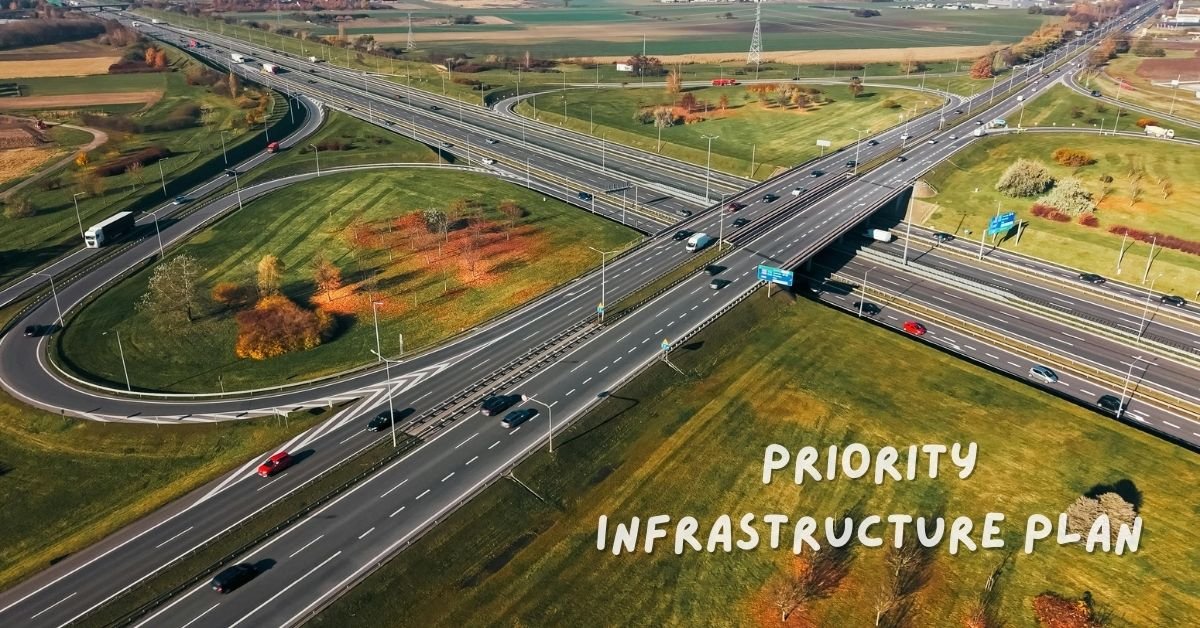
A priority infrastructure plan is a structured government strategy that identifies and fast-tracks critical infrastructure projects essential for economic growth, public welfare, and long-term development. These plans focus on high-impact sectors such as transportation, energy, healthcare, water supply, and digital connectivity.
Instead of funding projects randomly, governments use a priority infrastructure plan to allocate resources strategically. The objective is clear: accelerate development, attract investment, and improve quality of life while ensuring efficient use of public funds.
What Is a Priority Infrastructure Plan?
A priority infrastructure plan is a formal roadmap used by municipalities, regional authorities, and national governments to sequence infrastructure investments. It defines which projects are critical, which can wait, and how resources should be allocated over time.
Unlike general development plans, this approach focuses specifically on infrastructure prioritization. It evaluates projects based on criteria such as economic return, social benefit, environmental impact, feasibility, and risk management. The result is a structured decision-making model rather than ad hoc development.
These plans usually include:
- Transportation networks (roads, highways, railways, ports)
- Energy infrastructure (power plants, renewable energy grids)
- Water and sanitation systems
- Healthcare and education facilities
- Digital infrastructure (broadband, telecom networks)
The core idea is prioritization. Not every project can be executed at once due to budget constraints. A priority infrastructure plan ensures the most impactful projects are completed first.
Why Cities Need a Priority Infrastructure Plan
Rapid Urbanization
Urban populations are growing at an unprecedented rate. New housing, commercial spaces, and industrial zones emerge quickly, but core services often lag behind. Without infrastructure sequencing, cities face traffic congestion, power shortages, water crises, and overcrowded facilities.
A priority infrastructure plan ensures infrastructure growth matches population expansion instead of trailing behind it.
Limited Financial Resources
Public budgets are finite. Governments cannot fund every project at once. Infrastructure prioritization helps allocate funds to projects that deliver the highest social and economic return.
This reduces wasteful spending and prevents politically motivated but low-impact investments.
Risk and Climate Resilience
Modern infrastructure planning must account for climate risks such as flooding, heatwaves, and energy instability. A strategic plan incorporates resilience and long-term sustainability, ensuring that infrastructure investments remain viable for decades.
Core Components of a Priority Infrastructure Plan
1. Needs Assessment
The process begins with identifying infrastructure gaps. Planners analyze current systems, future population projections, and economic growth trends.
This stage relies on data analytics, feasibility studies, and stakeholder consultations.
2. Project Evaluation Criteria
Projects are ranked based on:
- Economic impact
- Social benefit
- Urgency
- Environmental sustainability
- Technical feasibility
- Long-term maintenance costs
This structured evaluation eliminates subjective decision-making.
3. Financial Planning
Infrastructure investment planning includes budgeting, funding sources, and possible public-private partnerships. Cost-benefit analysis ensures that resources are used efficiently.
4. Phased Implementation Strategy
Projects are scheduled in phases. Critical systems like water and energy typically receive priority over non-essential projects such as beautification initiatives.
5. Monitoring and Adaptation
A priority infrastructure plan is a living document. It evolves based on new data, economic shifts, and environmental challenges.
How a Priority Infrastructure Plan Supports Economic Growth
Strategic infrastructure development directly influences economic performance. Efficient transportation networks reduce logistics costs. Reliable energy systems attract industries. Strong digital infrastructure supports innovation and startups.
Cities that follow structured infrastructure prioritization often experience:
- Higher investment inflow
- Increased job creation
- Improved productivity
- Stronger regional competitiveness
Infrastructure becomes an economic multiplier rather than just a public utility.
Priority Infrastructure Plan vs Traditional Planning
Traditional planning often focuses on long wish lists of projects without ranking them effectively. Political pressure or short-term gains sometimes dictate decisions.
A priority infrastructure plan, on the other hand, emphasizes:
- Data-driven decision making
- Clear ranking systems
- Long-term sustainability
- Measurable impact
The difference lies in strategic sequencing instead of reactive spending.
Examples of Infrastructure Prioritization
Example 1: Transportation First Strategy
A growing metropolitan region identifies severe traffic congestion limiting economic expansion. Instead of constructing new commercial zones immediately, authorities prioritize public transit and road network upgrades.
Once mobility improves, business development accelerates naturally.
Example 2: Water Security Before Expansion
A coastal city facing water scarcity invests first in water treatment and storage systems. Only after securing basic resources does it approve large-scale housing development.
This prevents future infrastructure collapse.
Example 3: Digital Infrastructure in Emerging Economies
Regions aiming to attract technology firms prioritize broadband networks and smart grid systems before building high-end commercial districts.
Digital infrastructure becomes the foundation for economic transformation.
Role of Technology in Modern Infrastructure Planning
Today’s infrastructure planning uses advanced tools such as:
- Geographic Information Systems (GIS)
- Predictive analytics
- Digital twins
- Real-time monitoring systems
These technologies allow planners to simulate project outcomes, forecast growth patterns, and evaluate long-term impact before committing funds.
Data-driven infrastructure management reduces uncertainty and improves return on investment.
Benefits of a Priority Infrastructure Plan
- Faster economic growth
- Job creation
- Increased private investment
- Reduced regional inequality
- Improved quality of life
- Long-term sustainability
Infrastructure investment also creates indirect employment in construction, logistics, and services.
Long-Term Impact of a Priority Infrastructure Plan
A well-designed priority infrastructure plan creates a strong foundation for sustainable growth. Over time, it increases national productivity, reduces operational costs for businesses, and improves public services.
Countries that consistently implement structured infrastructure planning experience faster industrialization and stronger global competitiveness.
Frequently Asked Questions
1. What is a priority infrastructure plan?
A priority infrastructure plan is a government strategy that identifies and fast-tracks high-impact infrastructure projects based on economic and social importance.
2. Why is a priority infrastructure plan important?
It ensures efficient budget allocation, accelerates economic growth, and attracts private investment.
3. What sectors are included in a priority infrastructure plan?
Common sectors include transportation, energy, urban development, healthcare, water systems, and digital infrastructure.
4. How does a priority infrastructure plan benefit the economy?
It reduces logistics costs, creates jobs, boosts productivity, and improves investor confidence.
5. What is the difference between infrastructure policy and a priority infrastructure plan?
Infrastructure policy sets the overall vision, while a priority infrastructure plan focuses on selected high-impact projects with defined timelines and funding.