
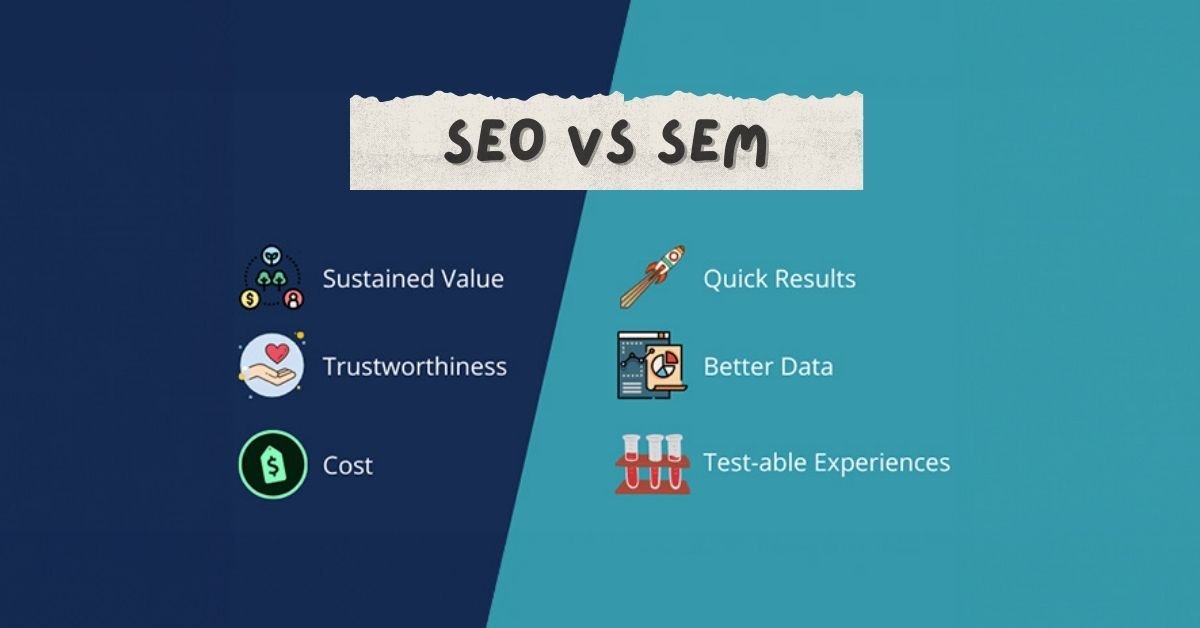
When it comes to digital marketing, one of the most common questions beginners ask is the difference between SEO and SEM. Both are powerful strategies used to increase website visibility on search engines like Google, but they work in very different ways.
SEO (Search Engine Optimization) focuses on improving organic rankings, while SEM (Search Engine Marketing) includes paid advertising to gain immediate visibility. Understanding how these two strategies differ-and how they complement each other-is essential if you want to build a strong online presence and drive consistent traffic.
What is SEO (Search Engine Optimization)?
SEO, or Search Engine Optimization, is the process of optimizing your website to rank higher in organic (non-paid) search engine results. It involves improving content, website structure, and backlinks to make your site more relevant and authoritative.
SEO is a long-term strategy that focuses on building trust with search engines. It requires continuous effort, including keyword optimization, technical improvements, and high-quality content creation.
Key Components of SEO
- On-Page SEO: Optimizing content, meta tags, headings, and keywords
- Off-Page SEO: Building backlinks and improving domain authority
- Technical SEO: Improving website speed, mobile-friendliness, and crawlability
SEO helps generate free, consistent traffic, but it takes time to see significant results.
What is SEM (Search Engine Marketing)?
SEM, or Search Engine Marketing, is a broader term that includes paid strategies to promote your website on search engines. It mainly involves running ads through platforms like Google Ads to appear at the top of search results instantly.
Unlike SEO, SEM delivers quick results. Businesses bid on keywords, and their ads appear when users search for those terms. You pay for each click, making it a pay-per-click (PPC) model.
Key Components of SEM
- Paid Search Ads (PPC)
- Keyword Bidding Strategy
- Ad Copy Optimization
- Landing Page Optimization
SEM is ideal for businesses looking for immediate traffic, leads, or sales.
Key Difference Between SEM and SEO
Understanding the difference between SEM and SEO becomes easier when comparing their core features:
1. Paid vs Organic Traffic
SEO focuses on organic traffic, meaning you don’t pay for clicks. SEM, on the other hand, involves paid ads where each click has a cost.
2. Time to Results
SEO takes time to show results because it builds authority gradually. SEM provides instant visibility as soon as campaigns are launched.
3. Cost Structure
SEO requires investment in content and optimization but offers long-term benefits. SEM requires continuous spending, and traffic stops when the budget ends.
4. Sustainability
SEO is sustainable and continues to generate traffic over time. SEM is temporary and depends on ongoing ad spend.
5. Click-Through Behavior
Users often trust organic results more than ads, making SEO valuable for credibility. SEM ads, however, are effective for quick conversions and promotions.
SEO vs SEM: Detailed Comparison Table
| Factor | SEO | SEM |
|---|---|---|
| Traffic Type | Organic | Paid |
| Cost | Free clicks | Pay per click |
| Results Speed | Slow | Instant |
| Long-Term Value | High | Low without budget |
| Trust Factor | High | Medium |
| Control | Limited | High targeting control |
When to Use SEO
SEO is best when businesses want sustainable growth and long-term visibility. It works well for blogs, informational websites, and brands focusing on authority building.
If your goal is to rank for keywords like “web development services” or “digital marketing tips,” SEO is the ideal strategy. Over time, it reduces dependency on paid ads.
When to Use SEM
SEM is ideal for businesses that want immediate results, such as product launches, seasonal offers, or lead generation campaigns.
For example, if you are running a limited-time discount or targeting competitive keywords, SEM helps you appear instantly at the top of search results.
When Should You Use SEO?
SEO is best suited for businesses that want to build long-term visibility and authority. If your goal is to generate consistent traffic without ongoing ad costs, SEO is the right approach.
For example, a blog or service website can benefit greatly from SEO by ranking for informational and transactional keywords over time.
When Should You Use SEM?
SEM works best when you need immediate results. It is ideal for launching a new product, running time-sensitive campaigns, or targeting high-competition keywords.
For example, an eCommerce store running a festive sale can use SEM to drive quick traffic and conversions.
Combining SEO and SEM for Best Results
Instead of choosing between SEO and SEM, the smartest approach is to use both together. SEO builds long-term growth, while SEM provides instant traffic and data insights.
For instance, you can use SEM to test which keywords convert best and then optimize your SEO strategy based on that data. This combination ensures both short-term gains and long-term success.
Frequently Asked Questions FAQs
1. What is the main difference between SEM and SEO?
The main difference is that SEO focuses on organic traffic, while SEM includes paid advertising to drive traffic.
2. Which is better, SEO or SEM?
Both are important. SEO is better for long-term growth, while SEM is ideal for quick results.
3. Is SEO part of SEM?
Yes, SEM is a broader term that includes both SEO and paid search strategies.
4. How long does SEO take to show results?
SEO typically takes 3 to 6 months to show noticeable improvements, depending on competition and strategy.
5. Can I use SEO and SEM together?
Yes, combining SEO and SEM provides the best results by balancing long-term growth and immediate visibility.