
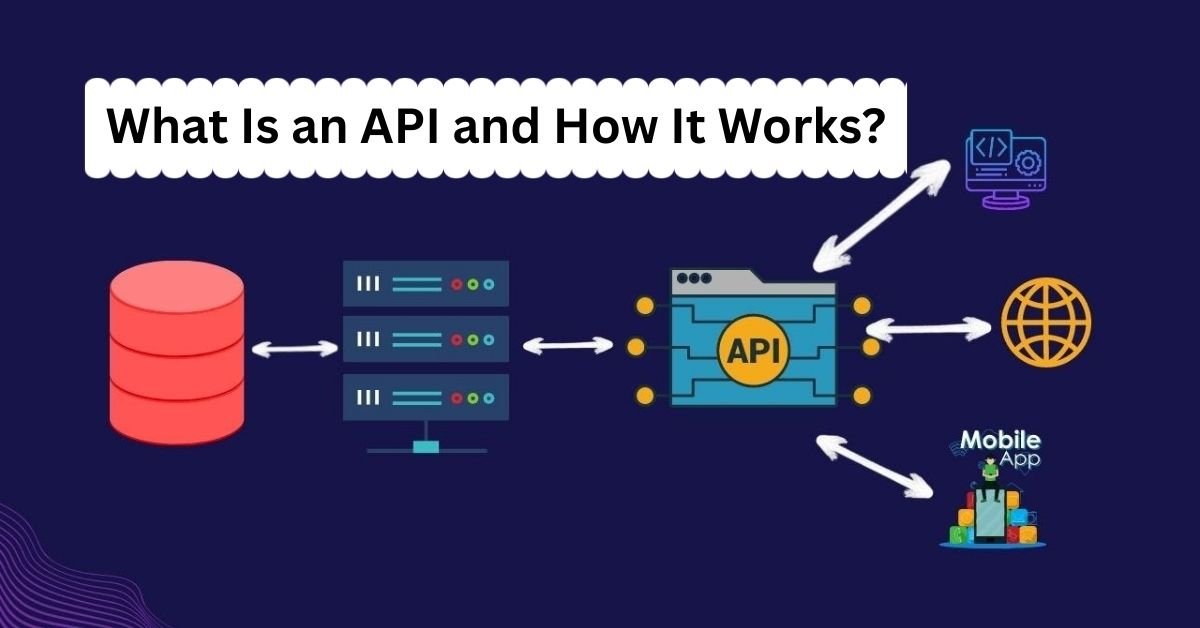
An API (Application Programming Interface) is one of the most important technologies behind modern software, websites, and mobile applications. Whenever you book a ride, check the weather, log in using Google, or make an online payment, APIs are working behind the scenes to connect different systems and exchange data.
Understanding what is an API and how it works is essential for developers, digital product managers, and even marketers who work with technology platforms. APIs allow different software applications to communicate with each other without needing to understand the internal code of each system.
In simple terms, an API acts like a messenger that takes requests from one application, sends them to another system, and returns the response. This mechanism makes it possible to integrate services, automate tasks, and build scalable digital products.
What Is an API?
An API (Application Programming Interface) is a set of rules and protocols that allows different software applications to communicate with each other.
In simple terms, an API acts as a bridge between two systems, enabling them to share data and functionality without revealing their internal code or architecture.
For example, when a mobile app displays weather information, it usually does not store the weather data itself. Instead, it requests data from a weather service API, which provides the required information.
Key points about APIs:
- APIs enable communication between applications
- They define how requests and responses are structured
- They allow developers to use external services easily
- They help integrate different platforms and systems
APIs are widely used in web applications, mobile apps, cloud platforms, payment systems, and social media integrations.
How APIs Work
To understand how an API works, it helps to think of it as a structured interaction between a client and a server.
The process usually follows these steps:
- A client application sends a request to an API.
- The API receives the request and forwards it to the appropriate server.
- The server processes the request and retrieves the necessary data.
- The API returns the response back to the client.
This interaction happens within milliseconds and allows systems to exchange data seamlessly.
Example Flow
A food delivery app requesting restaurant information:
- The app sends a request to the restaurant API.
- The API processes the request.
- The server returns restaurant data such as menu, ratings, and availability.
- The app displays this information to the user.
This communication typically occurs using HTTP protocols and structured data formats such as JSON or XML.
Key Components of an API
Understanding the core components of an API helps clarify how these systems function.
API Endpoint
An endpoint is the specific URL where an API can be accessed. Each endpoint corresponds to a particular function or dataset.
Example:
This endpoint returns current weather data.
Request
A request is sent by the client to the API and includes parameters such as:
- Request type (GET, POST, PUT, DELETE)
- Headers
- Authentication tokens
- Data parameters
Response
A response is the data returned by the API after processing the request. The response usually includes:
- Requested data
- Status code
- Metadata
Example response format:
{
“temperature”: “28°C”,
“city”: “Delhi”,
“condition”: “Sunny”
}
Types of API
APIs can be categorized based on accessibility and use cases.
1. Public APIs
Public APIs are available for developers to use openly. Companies provide these APIs so developers can integrate their services into other applications.
Examples include:
- Google Maps API
- Twitter API
- OpenWeather API
Public APIs often require API keys to manage access.
2. Private API
Private APIs are used internally within an organization. They help different internal systems communicate securely.
Example use cases:
- Internal company dashboards
- Data synchronization between internal services
- Enterprise system integration
3. Partner APIs
Partner APIs are shared with specific business partners rather than the public. Access is restricted and controlled.
Examples include:
- Payment processing integrations
- Logistics or supply chain integrations
- E-commerce partner services
4. Composite APIs
Composite APIs combine multiple API calls into a single request. This improves efficiency by reducing the number of separate API calls required.
Composite APIs are commonly used in microservices architecture.
Real-World Examples of APIs
APIs are integrated into many online services used daily.
Payment Gateways
Platforms like Stripe or PayPal provide APIs that allow websites to process payments securely without building payment systems from scratch.
Social Media Login
When users log in using Google or Facebook accounts, APIs handle authentication and user verification.
Maps and Location Services
Applications use APIs such as Google Maps API to display maps, directions, and location data.
Weather Data
Weather apps rely on APIs that provide real-time meteorological data.
Travel Booking Platforms
Travel websites integrate APIs from airlines and hotels to display real-time availability and prices.
Benefits of Using APIs
APIs provide multiple advantages for developers, businesses, and users.
Faster Development
Developers can integrate existing services instead of building complex features from scratch.
Scalability
APIs allow applications to expand functionality without major infrastructure changes.
System Integration
Different software platforms can connect easily through APIs.
Improved User Experience
APIs enable applications to provide richer features, such as real-time data and seamless integrations.
Automation
APIs automate tasks and data exchange between services.
Examples of API Usage in Modern Applications
E-commerce Websites
Online stores use APIs to connect:
- payment gateways
- inventory systems
- shipping providers
- analytics platforms
Mobile Applications
Mobile apps rely heavily on APIs for data retrieval, authentication, and cloud storage.
Cloud Platforms
Services like AWS and Google Cloud provide APIs to manage servers, storage, and infrastructure programmatically.
Expert Tips for Understanding and Using APIs
Learn Basic HTTP Methods
Understanding HTTP methods such as GET, POST, PUT, and DELETE is essential for working with APIs.
Use API Documentation
Most APIs include detailed documentation that explains endpoints, parameters, and authentication methods.
Test APIs Using Tools
Tools such as Postman or Insomnia allow developers to test API requests and responses easily.
Focus on Security
Always secure API keys and authentication tokens to prevent unauthorized access.
Monitor API Performance
Tracking response times and error rates helps maintain reliable integrations.
Conclusion
Understanding what an API is and how it works is fundamental for modern software development and digital platforms. APIs act as intermediaries that enable applications to communicate, exchange data, and extend functionality without exposing internal systems.
They power many everyday services, including payment systems, social media integrations, mapping services, and cloud platforms. By simplifying system communication and enabling seamless integration, APIs have become a cornerstone of modern digital infrastructure.
Developers and businesses that leverage APIs effectively can build scalable, flexible, and feature-rich applications while reducing development time and complexity.
Frequently Asked Questions (FAQs)
What does API stand for?
API stands for Application Programming Interface, which allows different software systems to communicate and exchange data.
What is an API in simple terms?
An API is a set of rules that enables applications to interact with each other and share information.
What is an example of an API?
A common example is the Google Maps API, which allows developers to embed maps and location services into websites or applications.
Why are APIs important?
APIs enable system integration, automate processes, and allow developers to use external services without building everything from scratch.
What protocols do APIs use?
Most modern APIs use HTTP or HTTPS protocols and return data in formats like JSON or XML.