
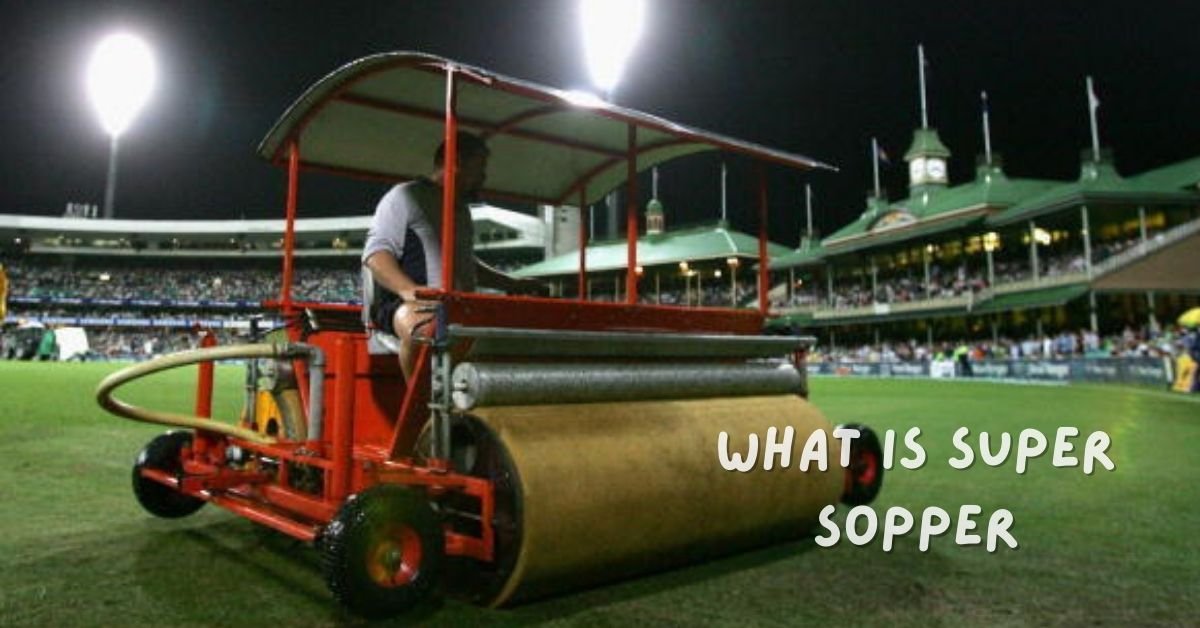
If you watch cricket regularly, you’ve probably seen a large sponge roller moving across the field after rain. That machine is called a super sopper. Understanding super sopper is important for cricket fans because it plays a major role in saving matches during rain interruptions.
In modern cricket, especially international and IPL games, quick ground recovery is essential. A super sopper helps remove excess water from the outfield fast, reducing delays and helping matches resume safely.
What Is Super Sopper?
The sponge absorbs water from the grass surface as it moves across the field. Once filled, the machine squeezes out the collected water into a storage tank, making it ready for the next round.
Unlike manual methods such as mops or towels, the super sopper covers large areas quickly and efficiently. That is why it is widely used in professional cricket matches worldwide.
How Does a Super Sopper Work?
To understand how does a super sopper work, you need to look at its three main components:
1. Sponge Roller System
The front part of the machine contains a thick, highly absorbent sponge roller. As the vehicle moves, this roller touches the grass and absorbs standing water.
2. Compression & Extraction Mechanism
After absorbing water, the sponge passes through a squeezing system inside the machine. This compression removes the collected water and sends it into a storage tank.
3. Continuous Drying Cycle
The machine keeps repeating this process-absorb, squeeze, collect-allowing it to dry large portions of the outfield quickly.
This is the simple explanation of how does a super sopper work for cricket grounds. It speeds up drying and ensures players can return safely without risking slips or injuries.
How Does a Super Sopper Work for Cricket Matches?
Cricket fields have large grassy outfields that become slippery after rain. Unlike football, cricket requires a dry surface for safe running and ball movement.
When rain stops, ground staff immediately bring out the super sopper. It focuses mainly on:
- Outfield wet patches
- Water collected near the boundary
- Areas where covers were removed
In high-profile tournaments like the Indian Premier League and ICC Cricket World Cup, super soppers are essential because match schedules are tight and broadcast timings are fixed.
The faster the ground dries, the quicker the umpires can inspect conditions and restart the match.
Why Is Super Sopper Important in Modern Cricket?
1. Saves Match Time
Rain interruptions can shorten games. Quick drying minimizes overs lost.
2. Improves Player Safety
Wet grass increases injury risk. A super sopper reduces slipping hazards.
3. Maintains Match Quality
A dry outfield ensures the ball travels normally. Wet grass slows the ball and changes gameplay dynamics.
4. Financial Importance
International matches involve broadcasting rights worth millions. Faster recovery protects revenue and viewer experience.
Super Sopper vs Traditional Drying Methods
| Method | Speed | Efficiency | Area Coverage | Labor Required |
|---|---|---|---|---|
| Towels & Mops | Slow | Low | Small | High |
| Manual Rollers | Moderate | Medium | Medium | Medium |
| Super Sopper | Very Fast | High | Large | Low |
The comparison clearly shows why professional stadiums prefer super soppers.
Real Match Examples
- During IPL matches in Mumbai, sudden showers often interrupt evening games. Super soppers are deployed immediately to prevent major delays.
- In World Cup matches, quick drying has helped complete full 50-over games despite rain interruptions.
- Domestic matches in India increasingly use mini super soppers for faster recovery.
These examples show the real-world impact of this machine.
Major Uses of Super Sopper
Agriculture
Super sopper is widely used in farming and gardening. When mixed with soil:
- It reduces irrigation frequency
- Prevents water runoff
- Enhances plant survival rate
- Improves fertilizer efficiency
Farmers in dry regions benefit significantly because it helps conserve water.
Cleaning & Spill Control
Super sopper materials are used in:
- Oil spill kits
- Chemical factories
- Workshops
- Hospitals
They prevent environmental damage by absorbing hazardous liquids quickly.
Personal Care Products
Hygiene products rely heavily on super sopper technology. Its high absorption prevents leakage and maintains dryness.
Super Sopper in Agriculture: Detailed Insight
In farming, super sopper is often mixed into the soil at root level. When irrigation or rainfall happens:
- It absorbs excess water
- Stores it near plant roots
- Releases moisture slowly
This reduces plant stress during dry periods.
For example, in vegetable farming, adding super sopper can improve crop survival during irregular rainfall seasons.
Business Opportunity: Super Sopper Market
The super absorbent polymer industry is growing due to:
- Increasing water scarcity
- Rising hygiene product demand
- Growth in agriculture technology
If you are exploring business ideas, manufacturing or distributing super sopper products can be profitable.
Why It’s a Good Business
- Growing global demand
- Recurring purchase cycle
- High industrial applications
- Export potential
You can start with agricultural-grade super sopper distribution in local markets.
Examples of Super Sopper Applications
- A farmer mixes 5 grams per plant in tomato farming to reduce watering frequency.
- An oil refinery uses industrial super sopper pads to control chemical leaks.
- A diaper brand uses super sopper polymer to increase absorption capacity.
- Landscaping companies use it in lawns to maintain greenery with less irrigation.
These examples show how versatile super sopper technology is.
Expert Tips for Using Super Sopper
- Always choose the right grade based on application.
- Do not overuse in soil; follow recommended dosage.
- Store in dry conditions to maintain effectiveness.
- For agriculture, mix evenly in root zone, not on surface.
Correct usage ensures maximum benefit and cost efficiency.
Common Mistakes to Avoid
- Using industrial grade in farming.
- Over-application leading to soil imbalance.
- Buying low-quality polymer with poor absorption.
- Expecting instant plant growth without proper irrigation management.
Super sopper improves efficiency but does not replace proper farming practices.
Environmental Impact of Super Sopper
Modern super sopper materials are designed to be:
- Non-toxic
- Safe for soil
- Stable for multiple years
However, quality matters. Always choose certified products for agricultural use to ensure safety.
FAQs About Super Sopper
1. What is super sopper used for?
Super sopper is used in agriculture, hygiene products, and industrial spill control due to its high absorption capacity.
2. Is super sopper safe for farming?
Yes, agricultural-grade super sopper is safe and improves soil moisture retention when used correctly.
3. How much water can super sopper absorb?
Depending on quality, it can absorb 100–500 times its own weight in water.
4. Is super sopper profitable for business?
Yes, demand is growing in agriculture and hygiene sectors, making it a strong business opportunity.
5. How long does super sopper last in soil?
It typically remains effective for 3–5 years, depending on environmental conditions and product quality.